Welcome Shenzhen Liten Flow Co,.Ltd.!


BLOGS
VMB, VDB, GC, CDS, GDS Explained: Semiconductor Fab Gas System Abbreviations
QUICK ANSWER
VMB, VDB, VMP, VDP, GC, BSGS, GS, CDS, GDS, GMS, DCS, and SIS are the standard abbreviations used across semiconductor fab utility drawings and specifications. VDB/VMB/VDP/VMP distribute gas from the source to tool points, GC/BSGS/GS describe where the gas comes from, CDS handles liquid chemical delivery, GDS/GMS monitor for leaks and system health, and DCS/SIS run the plant-wide automation and independent safety shutdown layers.
If you've spent any time reading fab utility drawings, RFQs, or gas panel datasheets, you've run into this alphabet soup: VMB, VDB, VMP, VDP, CDS, GC, GS, GMS, GDS, BSGS, DCS, SIS. Most of these abbreviations belong to three functional families inside a semiconductor fab's utility system — gas distribution, chemical & gas supply, and automation & safety. Knowing which family a term belongs to makes it far easier to read a P&ID correctly and avoid ordering the wrong piece of equipment for a hazardous gas application.
01Gas Distribution Equipment: VDB, VMB, VDP, VMP
These four terms describe hardware that takes gas from a central source and routes it to individual tool connection points. The difference comes down to two questions: is the gas hazardous or inert, and is the enclosure sealed or open?
VDB Valve Distributing Box
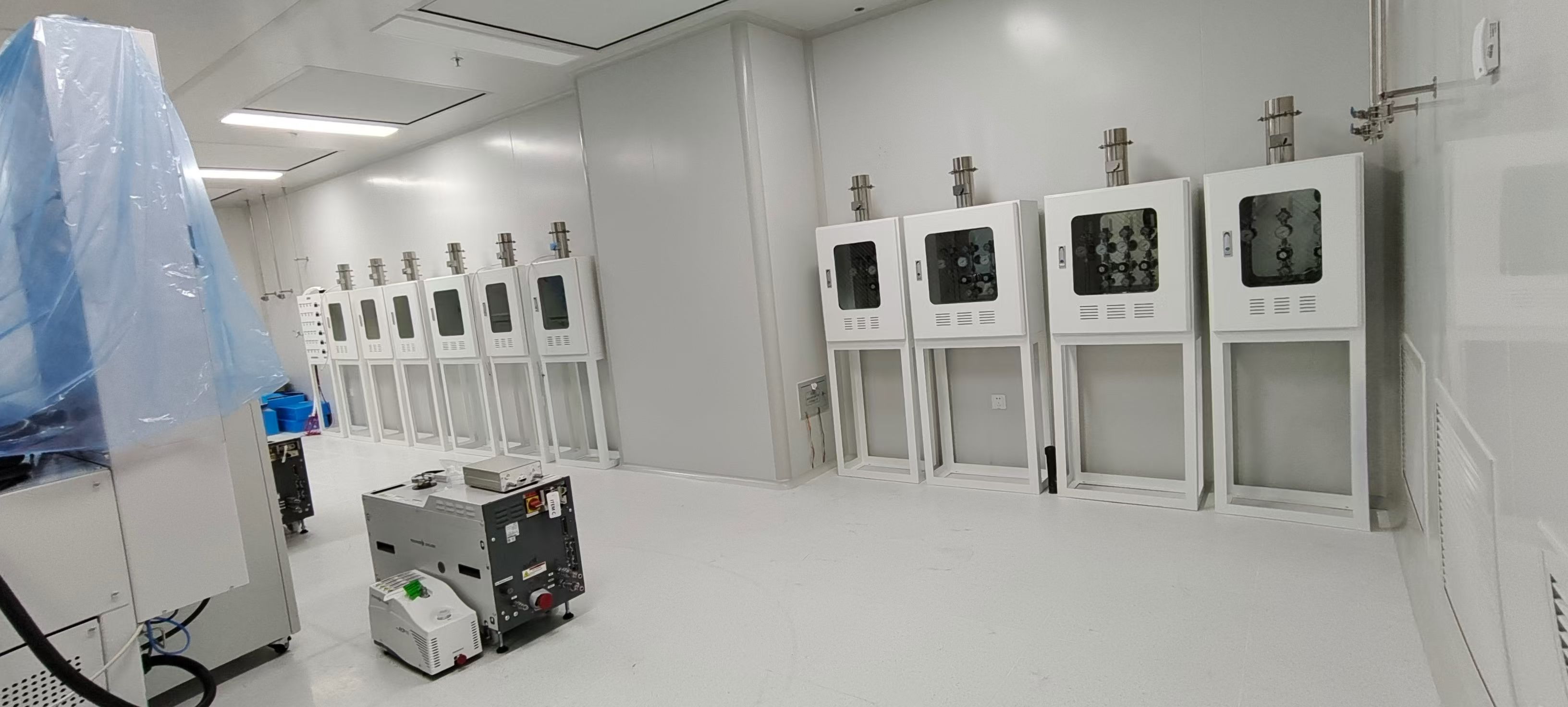
The main distribution box — the "trunk line" of the gas system. Typically installed in the sub-fab or utility area, with large ports and high flow capacity. It takes gas from the main header and splits it out to downstream boxes or panels.
VMB Valve Manifold Box
The sealed, sub-branch counterpart to the VDB, purpose-built for toxic, flammable, or corrosive specialty gases. It's installed close to the cleanroom tool it feeds, with a fully enclosed cabinet, dedicated exhaust, and safety interlocks. A VMB distributes high-purity gas from a single source to multiple points of use, and each point can have its pressure regulated independently — so several tools with different requirements can be served from the same manifold. It also supports purge and vacuum-pump-down on individual branch lines, letting technicians service or isolate one branch without shutting down gas supply to the rest of the system, and without exposing anyone to a hazardous gas leak.
VDP Valve Distribution Panel
Functionally the open-panel version of the VDB — no enclosure, lower cost, built for high-flow inert gases where containment isn't a safety requirement.
VMP Valve Manifold Panel
An open, box-free manifold panel, generally used for inert gases such as nitrogen. Lower cost than a VMB because it doesn't need a sealed enclosure or exhaust — appropriate only where the gas poses no inhalation or flammability risk.
Rule of thumb: box = hazardous gas, sealed and exhausted. Panel = inert gas, open and unenclosed. And within each pair, the "D" unit sits upstream of the "M" unit, closer to the tool.
02Gas Source & Supply: GC, BSGS, GS
Once you move upstream of the distribution boxes, you're into the equipment that actually stores and supplies the gas.
GC Gas Cabinet
The starting point for specialty gas storage — a fully enclosed cabinet housing one or more gas cylinders, with built-in forced exhaust, automatic purge sequencing, and auto-changeover between cylinders so supply isn't interrupted during a bottle swap.
BSGS Bulk Special Gas System
A larger-scale version of a GC, designed for high-purity, high-volume specialty gases (silane and ammonia are typical examples) supplied from a central bulk source rather than individual cylinders.
GS Gas Supply
A general umbrella term for the entire gas delivery system — source, piping, and distribution hardware together — rather than one specific component.
03Liquid Chemical Delivery: CDS
CDS Chemical Dispense System
The liquid-side counterpart to gas distribution. A CDS moves high-purity acids, bases, and solvents from central storage tanks to process tools such as photolithography and wet-clean stations, with the same precision and containment standards applied to specialty gas.
04Monitoring & Safety: GDS, GMS, DCS, SIS
These four systems don't move gas — they watch it, manage it, or shut it down.
GDS Gas Detection System
A dedicated sensor network that detects flammable or toxic gas concentrations in the air. When a threshold is exceeded, it triggers an alarm and can automatically activate exhaust or close isolation valves. It functions as an independent safety layer, separate from process control.
GMS Gas Management System
A broader system than GDS — it includes leak detection, but also monitors equipment status (pressure, temperature, liquid level), logs data, and provides remote control. Think of it as the central "control tower" for the specialty gas system as a whole.
DCS Distributed Control System
The fab-wide automation brain — not limited to gas. DCS handles process control and data acquisition for the entire facility, including water, power, and HVAC systems.
SIS Safety Instrumented System
An independent protection layer that sits apart from the DCS. Its only job is to trigger an emergency shutdown (ESD) when a dangerous condition occurs — overtemperature or overpressure, for example — to prevent a catastrophic event. Because it's independent of normal process control, it takes the highest safety priority in the facility.
05Quick Reference Table
| Abbreviation | Full name | Function | Typical gas / media |
| VDB | Valve Distributing Box | Main distribution, high flow | General / mixed |
| VMB | Valve Manifold Box | Sealed sub-distribution near tool | Toxic / flammable / corrosive |
| VDP | Valve Distribution Panel | Open main distribution | Inert, high flow |
| VMP | Valve Manifold Panel | Open sub-distribution | Inert (e.g. nitrogen) |
| GC | Gas Cabinet | Cylinder storage & changeover | Specialty gas |
| BSGS | Bulk Special Gas System | Central bulk supply | High-purity / high-volume specialty gas |
| GS | Gas Supply | Umbrella term for full system | All |
| CDS | Chemical Dispense System | Liquid chemical delivery | Acids, bases, solvents |
| GDS | Gas Detection System | Leak detection & alarm | Ambient air monitoring |
| GMS | Gas Management System | Monitoring, logging, remote control | Full gas system |
| DCS | Distributed Control System | Facility-wide automation | Gas, water, power, HVAC |
| SIS | Safety Instrumented System | Independent emergency shutdown | All hazardous processes |
06Putting It Together
→ VDB / VMB / VMP / VDP manage how the gas gets split — sealed and hazardous versus open and inert.
→ GC / BSGS manage where the gas comes from.
→ CDS manages the liquid chemical side.
→ GDS / GMS manage whether anything is leaking and how the system is running.
→ DCS / SIS handle facility-wide automation and independent safety shutdown.
Once you sort the twelve terms into these three buckets, most fab utility drawings become far easier to follow — and it becomes much clearer which component you actually need to spec when a project calls for a "gas manifold" or "distribution box."
Sourcing components for a VMB, VMP, or gas panel build?
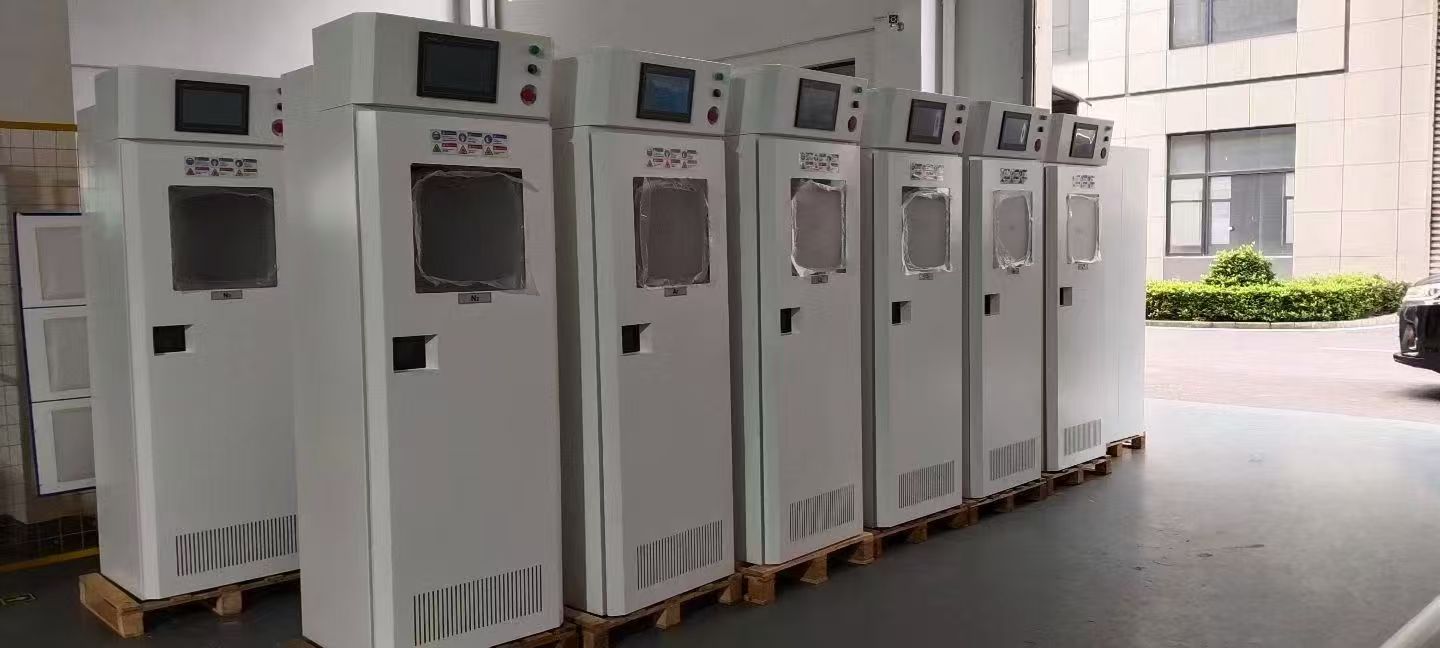
LITEN is an integrated manufacturer supplying pressure regulators, tube fittings, ball valves, needle valves, check valves, and gas panel components — including SS316L / SEMI F20 UHP options for high-purity applications, with MOQ from 1 piece and standard-model lead times under 7 days.
Request a Quote →
07Frequently Asked Questions
What's the difference between a VMB and a VDB?
A VDB is the upstream main distribution point, usually in the sub-fab, handling large flow. A VMB is a smaller, sealed, downstream sub-branch used specifically for hazardous specialty gases near the point of use, with its own purge, vacuum, and exhaust safety features.
Why does a VMP not need the same enclosure as a VMB?
A VMP is designed for inert gases such as nitrogen, which carry no toxicity or flammability risk — so the sealed cabinet, exhaust, and interlocks required for a VMB aren't necessary, which is why VMPs are built as open panels at lower cost.
Is GDS the same as GMS?
No. GDS is narrowly focused on detecting leaks and triggering alarms. GMS is broader — it includes leak detection but also monitors equipment status, logs data, and provides remote control across the whole gas system.
How does SIS differ from DCS?
DCS runs normal, everyday process control and automation across the facility. SIS is a completely independent safety layer whose only function is to trigger an emergency shutdown when a dangerous condition is detected — it doesn't participate in routine control, which is why it's kept separate from the DCS.